
Precision applied to Andrology
Andrological Microsurgery
The indication comes before the technique
Assessment and experience
Technique serving a well-defined indication.
My work in andrological microsurgery focuses on two procedures: varicocele correction and vasectomy reversal. Before proposing any surgery, I try to understand the patient's diagnosis, clinical history and goals. When there is a desire to have children, I also consider the couple's reproductive situation.
The microscope allows you to work with very small structures. But enlargement alone does not solve the surgery. It is necessary to recognize what you are seeing, preserve delicate structures and adapt the technique to the findings of each operation. Mastery of the microscope and the surgeon's experience are essential in both surgeries.

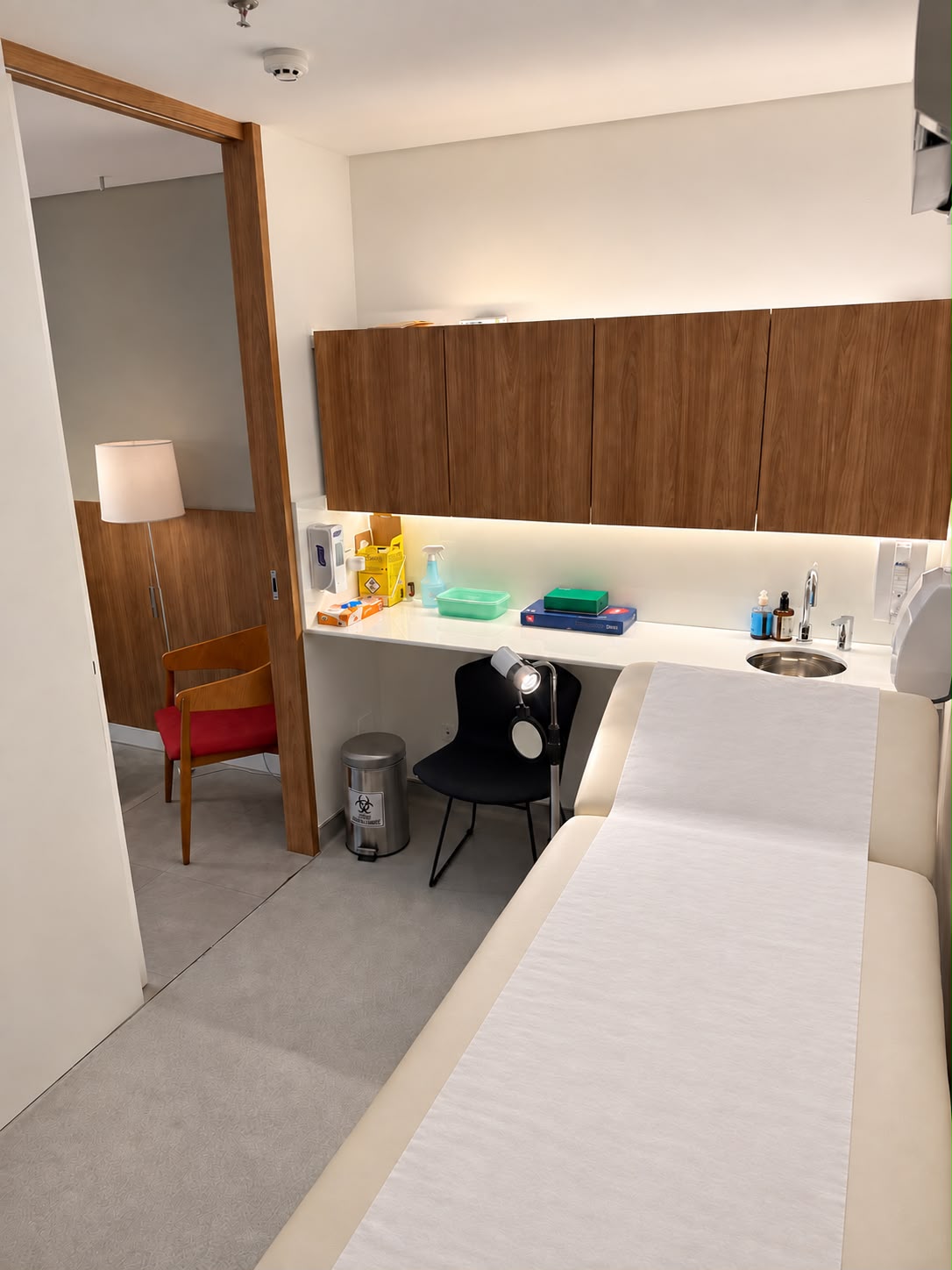

The office
An environment reserved for consultation.
Consultations take place at Itaim, in São Paulo, in a space reserved for calm conversations, examinations and discussions at each stage of the investigation and treatment.
Office 153
Rua Bandeira Paulista, 726, cj. 153Itaim · CEP 04532-002
Varicocele
Microsurgical correction of varicocele
A varicocele is a dilation of the veins around the testicle. Its presence does not mean, in itself, that it is necessary to operate. To decide, I list the physical examination, spermograms, symptoms and the couple's reproductive context.
When surgery is indicated, I use the operating microscope to identify the veins that need to be treated and preserve structures such as the testicular artery and lymphatic vessels. This work requires attention to details that are not always visible without magnification and familiarity with microsurgical anatomy.
Correction can improve spermogram parameters and contribute to the possibility of pregnancy when varicocele is part of infertility. In other patients, the indication may be related to pain. These are different objectives, which need to be discussed before the operation and monitored after it.
Microsurgical reconstruction
Microsurgical vasectomy reversal
Reversal seeks to restore the passage of sperm after vasectomy. During the consultation, I talk about the time since the procedure, the reproductive history and the couple's factors that may influence the possibility of a new pregnancy.
During surgery, reconstruction may rejoin the ends of the vas deferens or require a connection between the vas deferens and the epididymis. This choice depends, in part, on what is encountered during the operation. Sutures are made into very thin structures under a microscope and require specific training and experience.
After the reversal, we monitored the spermograms to check whether the sperm returned to the ejaculate. This return, called patency, is an important result of the surgery. Pregnancy also depends on the couple's other reproductive factors.
Precision at every step
Experience to recognize, preserve and rebuild.
The microscope magnifies what the surgeon sees. Experience determines what he recognizes, preserves and reconstructs. My work begins with a careful indication, goes through the technical execution of the surgery and continues with monitoring the results.