
Transurethral resection of the prostate (TURP)
Performed endoscopically, with monopolar or bipolar technology.

Urinary tract care
Individualized assessment
I treat conditions that require everything from clinical monitoring to surgical treatment. These include benign prostate enlargement, kidney and urinary stones, phimosis, hydrocele, urinary infections, the presence of blood in the urine, difficulties urinating, bladder changes and other conditions of the urinary tract and male genital organs.
Each complaint requires its own investigation. I try to understand the cause of symptoms before discussing follow-up care, medications or surgery.

The office
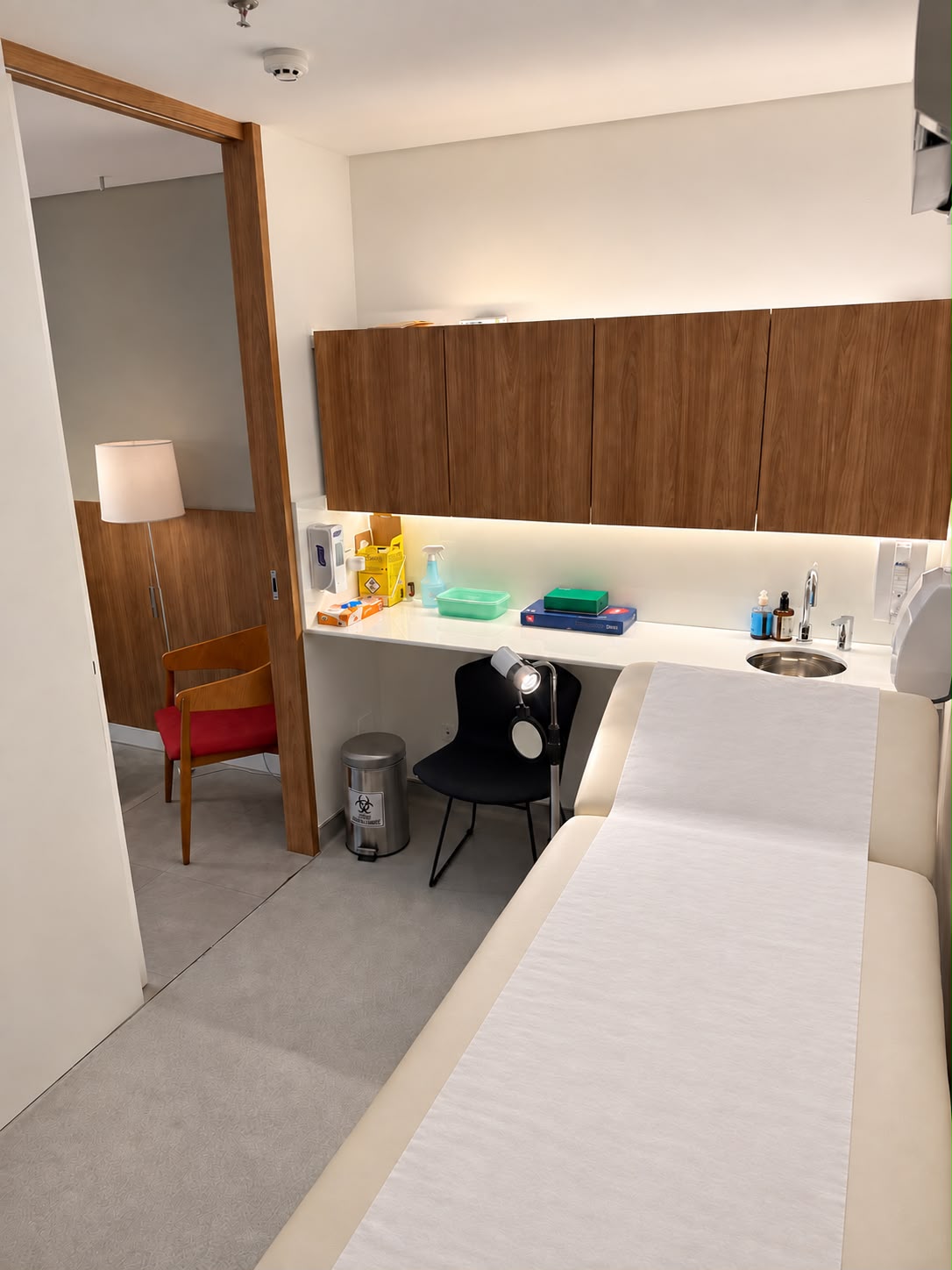
Consultations take place at Itaim, in São Paulo, in a space reserved for calm conversations, examinations and discussions at each stage of the investigation and treatment.
Office 153
Rua Bandeira Paulista, 726, cj. 153prostate
Benign prostatic hyperplasia, or BPH, can cause a weak stream, a delay in starting to urinate, a feeling that the bladder has not emptied and frequent trips to the bathroom, including at night.
The evaluation considers the symptoms, exams, size and anatomy of the prostate. When a procedure is necessary, possibilities include:
Performed endoscopically, with monopolar or bipolar technology.
Removal of the part of the prostate that causes the obstruction. It can be done with a holmium laser (HoLEP), thulium laser (ThuLEP) or bipolar energy.
Includes GreenLight laser and bipolar vaporization techniques.
Rezum, UroLift and iTIND, considered for specific patient profiles.
It can be performed open, laparoscopically or robotically, especially in very large prostates.
Option for selected situations, evaluated together with an interventional radiologist.
Some techniques combine steps, such as enucleation followed by morcellation or resection of the removed tissue. When choosing the treatment, I consider the degree of obstruction, the size of the prostate, the patient's health conditions and aspects that are important to him, such as recovery, ejaculation and the possibility of needing another procedure in the future.
Stone treatment
Endourology allows the treatment of many stones with instruments introduced through the urinary tract. When the stone is in the kidney or ureter, the choice of technique depends on its location, size, characteristics and the patient's anatomy. The main possibilities are:
Endoscopic treatment of stones in the ureter.
Use of a flexible ureteroscope to reach stones inside the kidney.
Access to the kidney through a small opening in the back, including miniaturized techniques.
Association of retrograde and percutaneous routes in selected cases.
Fragmentation of stones by shock waves, without introducing instruments into the urinary tract.
In endoscopic surgeries, fragmentation can be performed with a holmium laser or thulium fiber laser. In some situations, suction sheaths help to remove fragments and control the flow of liquid during the procedure. These resources are chosen according to the case and the structure available for the surgery.
Treating the stone is part of the care. Then, I assess the risk of new stones forming and the need for follow-up.
Urological care
I also evaluate and treat conditions such as phimosis and hydrocele, in addition to other urological complaints presented during the consultation. When surgery is indicated, I explain the objective of the procedure, the alternatives and what to expect from recovery.